
Anointing oil has been a sacred tool in spiritual practices for thousands of years. From biblical traditions to modern-day rituals, it serves as a powerful symbol of divine blessing, healing, and protection. Many people ask, “how do you bless anointing oil?” and the answer lies not only in the oil itself but in your intention, prayer, and ritual.
Blessing anointing oil may seem mysterious at first, but it can be a simple, meaningful, and profoundly spiritual practice. In this article, we’ll explore everything you need to know—from the spiritual significance of anointing oil, step-by-step blessing instructions, to creative ways you can use it in your daily life. Whether you are a beginner or a seasoned spiritual practitioner, this guide will empower you to connect deeply with the sacred energy of blessed oil.
Table of Contents
What Is Anointing Oil?
Anointing oil is more than just a fragrant liquid. It is a sacred substance infused with intention and spiritual energy. Traditionally, anointing oil was made using olive oil and sometimes combined with specific herbs and spices. Its use dates back to biblical times when priests and kings were anointed for protection, healing, and consecration.
Today, anointing oil can be made from any natural oil, commonly olive oil, coconut oil, or jojoba oil, often enhanced with essential oils such as frankincense, myrrh, or lavender. The core idea is that the oil becomes a vessel for divine energy and blessings when intentionally blessed.
Why Bless Anointing Oil?
Blessing anointing oil is a spiritual act that transforms ordinary oil into a sacred tool. Here’s why people bless anointing oil:
- Divine Protection: Blessed oil is believed to create a spiritual shield, keeping negative energy at bay.
- Spiritual Connection: Using blessed oil during prayer or meditation deepens your connection with the divine.
- Healing: It can be applied for emotional, spiritual, and even physical healing.
- Blessing Others: It can be used to consecrate objects, spaces, or individuals.
- Ritual Significance: Anointing oil plays a key role in ceremonies and rituals, symbolizing purification and devotion.
Understanding these purposes allows you to approach the blessing with mindfulness, making the oil more than a physical substance—it becomes a spiritual extension of your intentions.
How Do You Bless Anointing Oil? Step-by-Step
Blessing anointing oil is straightforward, but it requires focus, intention, and a sacred space. Here’s a detailed guide to help you get started.
Step 1: Gather Your Materials
Before you begin, collect the following items:
- A small bottle of oil – olive, coconut, or jojoba is ideal.
- Optional essential oils or herbs – frankincense, myrrh, lavender, or rose.
- A quiet, clean space – free from distractions to perform your ritual.
- Prayer or blessing statement – either traditional or personal.
Tip: Use a glass bottle to help you visually connect with your oil as you bless it.
Step 2: Prepare Your Sacred Space
Creating a sacred environment enhances the ritual’s energy. Consider these steps:
- Light a candle or incense to signify the presence of divine energy.
- Play calming or spiritual music that helps you focus.
- Clear the space of clutter and distractions.
- Sit comfortably and take a few deep breaths to center yourself.
Visualization can be helpful: imagine a warm, protective light surrounding your space, creating a spiritual bubble that focuses positive energy.
Step 3: Set Your Intention
The most critical step is intention. Ask yourself:
- What purpose will this anointing oil serve?
- Who or what am I blessing with it?
- What energy or blessing am I inviting?
Clearly define your intention and speak it aloud or silently. For example:
“I bless this oil to carry divine healing, protection, and spiritual guidance for all who use it.”
Your intention is the energy that transforms the oil from a physical substance into a spiritual tool.
Step 4: Pray or Speak a Blessing
Offer a prayer to bless the oil. It can be traditional, drawn from sacred texts, or fully personal. A simple blessing could be:
“Heavenly Creator, I consecrate this oil for Your holy purpose. May it bring protection, healing, and blessings to all who use it. May Your divine presence be honored in every drop. Amen.”
Repeat the blessing multiple times if you wish. Speak with sincerity and focus, letting your energy infuse the oil.
Step 5: Infuse the Oil With Spiritual Energy
Gently hold the bottle or swirl the oil while visualizing your intention entering it. Some techniques include:
- Hand energy transfer: Place your hands above the oil and imagine energy flowing from you into it.
- Meditative focus: Sit in quiet meditation and focus on your intention for several minutes.
- Light visualization: Imagine a warm light filling the bottle, representing divine energy.
This step personalizes the oil, making it a reflection of your spiritual intent.
Step 6: Optional Herbs or Essential Oils
Enhance your anointing oil by adding herbs or essential oils that align with your purpose:
- Frankincense: spiritual purification and divine presence
- Myrrh: protection and sacred energy
- Lavender: calm, healing, and balance
- Rose: love, blessings, and positivity
Remember, just a few drops or small amounts are sufficient. The key is meaningful intention, not quantity.
Step 7: Seal and Store Your Oil
Once blessed, store the oil carefully:
- Use a dark, cool place to preserve energy and shelf life.
- Keep the bottle in a special drawer, cabinet, or pouch.
- Label the bottle with the date and purpose to remember its significance.
Treat your blessed oil with reverence—it is now a sacred tool.

Creative Ways to Use Blessed Anointing Oil
Blessed oil is versatile. Here are some ways to incorporate it into your spiritual practice:
Personal Anointing
Apply a small amount to your wrists, forehead, or hands during prayer or meditation. This invites spiritual presence and grounding energy.
Blessing Your Home
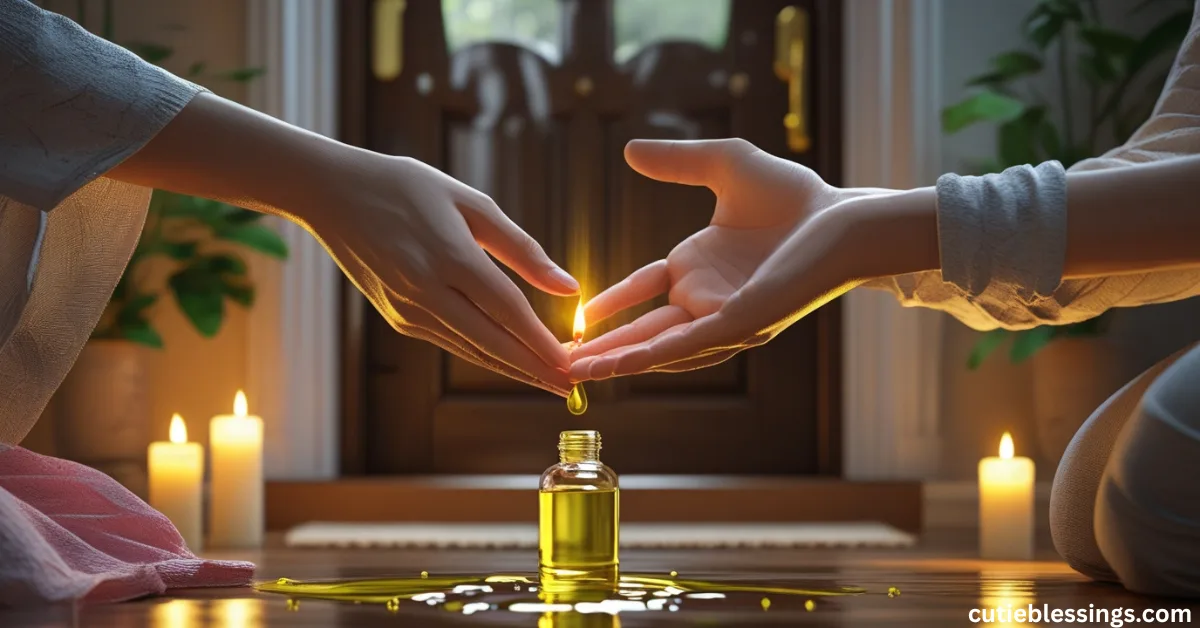
Anoint door frames, windows, or sacred spaces to invite protection and positive energy. You can also place a few drops in a diffuser to spread the energy.
Healing Rituals
Gently rub oil on areas of discomfort or during meditation for emotional, spiritual, or even physical healing. Focus on visualizing the energy working through the body.
Ceremonial Use
Use the oil in baptisms, confirmations, or other spiritual ceremonies to symbolize divine blessing, purification, and consecration.
Gifts and Sharing
Sharing blessed oil with loved ones conveys love, protection, and spiritual support. You can also create personalized oils for special intentions.
Tips for Enhancing Your Anointing Oil Blessing
- Bless regularly: Refreshing your oil maintains its spiritual resonance.
- Use your voice: Your prayers carry personal energy and intention.
- Visualize vividly: Imagine blessings flowing into the oil as you pray.
- Be patient: Spiritual energy builds over time; don’t rush the process.
- Respect sacred space: Store and handle blessed oil with reverence.
Examples of Prayers and Blessings
Here are a few examples to inspire your own blessing:
For Protection:
“May this oil carry divine protection to all who touch it. Let no harm or negativity enter their life.”
For Healing:
“I bless this oil to bring healing, comfort, and peace. May it ease the burdens of body, mind, and spirit.”
For Love and Positivity:
“I consecrate this oil to spread love, joy, and harmony. May those anointed feel warmth and compassion.”
Personal Stories and Anecdotes
Many people report transformative experiences after blessing and using anointing oil. For instance:
- Mary, a spiritual practitioner, shared how blessing oil for her home helped her family feel safer and more peaceful.
- David, who struggled with stress, found that applying blessed oil to his hands and meditation space created a calming atmosphere.
- Elena, a mother, shared blessed oil with her children during bedtime prayers, creating a sense of divine protection and emotional comfort.
These examples highlight that the power of anointing oil comes not just from ritual but from heartfelt intention and consistent practice.
Conclusion:
Blessing anointing oil is a simple, accessible, and profoundly meaningful practice. By following these steps—gathering materials, setting intention, offering prayers, and infusing the oil with spiritual energy—you can transform ordinary oil into a sacred tool of protection, healing, and divine connection.
Whether used personally, shared with loved ones, or integrated into ceremonies, blessed anointing oil has the potential to elevate your spiritual practice and create an environment filled with positivity and divine presence.
When you ask, “how do you bless anointing oil?”, remember that the process itself is sacred. The energy, intention, and prayer you put into the oil are what imbue it with spiritual power. Take your time, honor your intention, and let the oil become a beacon of divine blessings in your life.
With consistent practice, anointing oil becomes more than a ritual tool—it becomes a source of spiritual empowerment, love, and peace. Start today, and discover the profound blessings this simple act can bring.
You can also read: Blessed Botanicals Black Seed Oil: Top Benefits Revealed
FAQs:
How often should I bless my anointing oil?
You can bless it once or refresh it periodically. Some practitioners do this monthly or seasonally.
Can I bless any type of oil?
Yes! Natural oils like olive, coconut, or jojoba are ideal. Essential oils and herbs enhance energy but are optional.
Do I need to follow a religious tradition?
No, blessing oil is a personal spiritual practice. You can adapt prayers to your beliefs.
Can anointing oil be used for protection?
Absolutely. Anointing oil is commonly used to protect individuals, homes, and sacred spaces.
How long does blessed anointing oil last?
Properly stored in a cool, dark place, blessed oil can last months or years. Essential oils may slightly alter the shelf life.
Is it okay to share blessed oil with others?
Yes! Sharing the oil extends your intention and blessings to others, strengthening spiritual connections.