
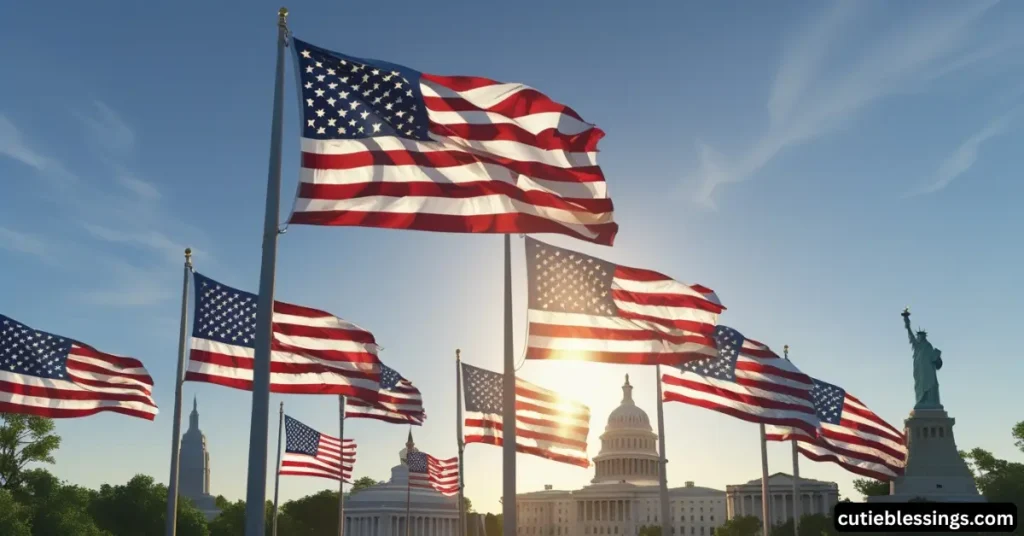
On the morning after September 11, 2001, front yards across America displayed banners with three words: God Bless America. From city streets to suburban neighborhoods, these flags became symbols of resilience, national pride, and collective grief.
The phrase God Bless America has long resonated with the American public, but when combined with a visual symbol—a flag—it transforms into a powerful emblem of unity. These flags represent more than decorative patriotic items; they reflect shared values, hope in challenging times, and reverence for the nation’s history.
To truly understand God Bless America Flags, one must explore their origins, symbolism, historical use, cultural significance, design variations, proper etiquette, and contemporary relevance. This guide covers all of these aspects in depth.
Table of Contents
What Are God Bless America Flags?
God Bless America Flags are decorative patriotic banners that prominently feature the phrase God Bless America. Often, these flags include elements of the United States flag, such as stars and stripes, and may incorporate eagles, crosses, or other subtle symbols of faith.
Common Features of These Flags
- Stars and Stripes: Borrowed from the American flag to maintain patriotic identity
- Bold Typography: The phrase is the centerpiece
- Eagle Imagery: Represents freedom, strength, and national pride
- Red, White, and Blue Colors: Core American colors that evoke unity and tradition
- Religious Motifs: Some designs subtly incorporate crosses or other spiritual symbols
Typical Uses
- National holidays: Independence Day, Memorial Day, Veterans Day
- Patriotic parades and rallies
- Military and first-responder appreciation events
- Religious services and national days of prayer
- Home and garden decor
Unlike the official U.S. flag, these banners are not legally regulated but carry emotional and cultural authority.
Historical Background of God Bless America Flags
The phrase God Bless America originated with the song by Irving Berlin, written in 1918 during World War I. Berlin revised the song in 1938, and it quickly became an unofficial national hymn. Its lyrics called for divine guidance and protection for the country, and it resonated across political, religious, and social divides.
Patriotic Flags Through History
- American Revolution (1775–1783): The original flags symbolized independence and unity
- Civil War Era: Flags became tools of morale and identity for troops and civilians
- World War I: Patriotic displays increased, with banners in public spaces
- World War II: Flags, including God Bless America variations, became symbols of solidarity and collective sacrifice
- The Cold War: Patriotic symbols reinforced national identity during geopolitical tension
- Post-9/11: A resurgence of visible patriotism, particularly God Bless America Flags, marked national mourning and unity
This historical trajectory highlights how flags serve as cultural touchstones, visually connecting citizens to moments of shared experience.
Symbolism of God Bless America Flags
God Bless America Flags are multi-layered symbols that communicate several key messages:
1. Faith and National Identity
The phrase itself evokes a religious sentiment, reflecting a tradition of prayerful patriotism. While the United States maintains separation of church and state, public expressions of faith have historically influenced national rituals and civic identity.
2. Unity During Crisis
During national crises—wars, tragedies, or political turmoil—these flags become symbols of collective strength. Displaying them communicates a sense of belonging and mutual support.
3. Gratitude and Hope
The flags express gratitude for freedom and hope for continued protection. They are reflective, forward-looking, and emotionally resonant.
4. Support for Military and First Responders
Many designs incorporate eagles, badges, or service symbols to honor the armed forces, police officers, firefighters, and other first responders.
5. National Resilience
The flags are reminders of American perseverance, signaling that the nation can withstand adversity while remaining unified in values and principles.
Design Variations of God Bless America Flags
God Bless America Flags are not uniform; they exist in multiple designs to suit different tastes, occasions, and cultural interpretations.
Classic Stars and Stripes
The traditional design overlays the phrase on a full U.S. flag background. It emphasizes classic patriotism and familiarity.
Rustic and Vintage Styles
Distressed prints suggest historical depth and evoke a sense of nostalgia. These are particularly popular in farmhouse or country-style decor.
Eagle-Themed Flags
The bald eagle symbolizes strength, freedom, and vigilance. Flags with eagle imagery often appear in military tributes or patriotic ceremonies.
Minimalist Typography
Some flags forego imagery, focusing purely on bold lettering of God Bless America. These modern designs emphasize the message over ornamentation.
Decorative Accents
Additional elements, such as stars, borders, or subtle religious symbols, allow homeowners to reflect personal beliefs and aesthetic preferences.
Cultural Impact and Emotional Psychology
God Bless America Flags are more than physical objects—they function as identity markers. Social psychology demonstrates that shared symbols strengthen group belonging, reinforce narratives, and increase pride in collective identity.
Psychological Functions
- Group cohesion: Flags visually signal community membership
- Emotional expression: They provide a safe outlet for patriotic feelings
- Historical continuity: Flags connect modern society to historical events
Public Visibility
You can find these flags at:
- Parades and civic events
- Schools and universities during sporting or graduation ceremonies
- Religious gatherings
- Military homecomings and memorials
They communicate shared values and offer a unifying visual language that transcends words.
Patriotic Flags in Pop Culture and Media (New Section)
Beyond homes and public spaces, God Bless America Flags have made their way into popular culture, music, and film, further solidifying their symbolism.
- Music and Performances: The phrase and its flags are highlighted in concerts, Broadway productions, and televised patriotic events, especially renditions of God Bless America during sports or national ceremonies.
- Film and Television: Scenes featuring these flags evoke Americana, national pride, or historical context, appearing in movies, TV shows, and documentaries.
- Digital Media: Social media platforms see spikes in posts featuring these flags around patriotic holidays, with users sharing displays of home decor, parades, and community events.
Through media and pop culture, these flags have extended their reach from tangible banners to symbols embedded in national identity, deepening cultural relevance.
Legal Considerations and Proper Etiquette
While God Bless America Flags are decorative, understanding the legal and ethical distinctions from the U.S. flag is important.
- Official U.S. Flag: Subject to U.S. Flag Code (Title 4, 1942). Includes display, folding, lighting, and disposal guidelines.
- God Bless America Flags: Not federally regulated; protected as free speech under the First Amendment.
- Respectful Display: Even if not legally required, it is culturally appropriate to treat these flags with care. Avoid placing them below or disrespecting the official U.S. flag.
Adhering to etiquette enhances the perceived authenticity and seriousness of patriotic displays.
Materials, Durability, and Maintenance
Materials
- Polyester: Long-lasting, durable for outdoor use
- Nylon: Lightweight, ideal for movement in the wind
- Cotton: Classic texture, primarily for indoor displays
Maintenance Tips
- Store indoors during extreme weather
- Gently hand wash and air dry
- Avoid harsh chemicals or UV exposure
- Use reinforced stitching for outdoor longevity
High-quality materials enhance durability and aesthetic appeal, making the flags suitable for permanent home decor or ceremonial use.
Modern Home and Public Decor Trends
God Bless America Flags have transitioned from purely ceremonial objects to decorative home accents:
- Farmhouse Interiors: Rustic patriotic banners for living rooms and entryways
- Seasonal Decor: Summer or Independence Day displays
- Military Appreciation: Honoring veterans or active-duty service members
- Event Decor: Parades, community events, and patriotic parties
This trend demonstrates the flexibility of these flags as both symbols and decorative elements.
Community and Grassroots Patriotism (New Section)
God Bless America Flags are often a reflection of local pride and community spirit. Neighborhoods across the U.S. display these flags during town fairs, school events, and charity drives. Local organizations use them as unifying symbols, raising flags at community centers or incorporating them into events honoring veterans and first responders.
Grassroots initiatives, like flag drives or patriotic yard competitions, encourage civic engagement while visually demonstrating shared national pride. In many communities, displaying God Bless America Flags has become an informal tradition, passing values of patriotism and unity to younger generations.
Symbolism in Context of American Values
God Bless America Flags reflect widely recognized national ideals:
- Freedom: Flag imagery conveys liberty and independence
- Unity: Shared symbols bridge political or social divides
- Gratitude: Emphasizes thankfulness for national blessings
- Resilience: Encourages perseverance in times of hardship
Through these values, the flags serve as both emotional anchors and cultural touchstones.
Presidential and Political Use
Throughout history, presidents and political leaders have invoked God Bless America in speeches, ceremonies, and public appearances:
- Franklin D. Roosevelt: Used during World War II radio broadcasts
- Ronald Reagan: Quoted in public addresses to reinforce unity
- George W. Bush: After 9/11, displayed prominently in speeches and events
- Barack Obama: Incorporated in national celebrations to honor service members
This usage reinforces the national legitimacy and authority of the phrase and the flags themselves.
The Role of Flags in Education and Civic Learning (New Section)
God Bless America Flags also play an important role in civic education:
- School Programs: Used to teach students about history, government, and national symbols
- Youth Organizations: Groups like Boy Scouts and Girl Scouts incorporate flags in ceremonies to instill patriotism and civic responsibility
- Museums and Historical Exhibits: Flags provide context about national identity and cultural traditions
By exposing young generations to these flags in educational settings, communities ensure the lessons of unity, resilience, and gratitude are preserved for the future.
Controversies and Social Debate
While widely accepted, God Bless America Flags can provoke discussion:
- Religion vs. State: Some debate the blending of faith and patriotism
- Political Associations: Flags can appear in partisan contexts
- Cultural Sensitivity: Critics argue they may alienate non-religious citizens
Historically, however, the phrase and flags have transcended political and religious divides, appearing in neutral national celebrations.
The Enduring Appeal
God Bless America Flags endure because they combine emotion, history, and identity. They communicate powerful messages of unity, gratitude, hope, and resilience across generations.
Whether displayed during holidays, in homes, at public events, or in schools, they remain one of the most recognizable patriotic symbols in the United States.
You can also read: Why This God Bless America Shirt Is Winning Hearts Nationwide
Conclusion
God Bless America Flags are not simply banners—they are living symbols of American identity. Rooted in history, reinforced through culture, and displayed across the nation, they embody values of freedom, unity, and hope.
Next time you see one waving in a yard, a parade, or a ceremony, pause for a moment—consider the generations who have drawn strength from these words and colors. By understanding their history, symbolism, and proper use, we gain a deeper appreciation for why these flags continue to inspire Americans and remain a staple of patriotic expression.
They are more than fabric; they are a reminder of who we are, what we value, and what we can achieve together—a living emblem of the enduring American spirit.
FAQs:
What are God Bless America Flags?
God Bless America Flags are decorative banners that feature the phrase God Bless America, often combined with U.S. flag elements, eagles, or patriotic symbols.
What is the history of God Bless America Flags?
The phrase originated from Irving Berlin’s song in 1918, popularized in 1938, and the flags became symbols of national pride and unity, especially after wars and events like 9/11.
What do God Bless America Flags symbolize?
They symbolize faith, unity, gratitude, resilience, and patriotism, reflecting American values and collective identity during celebrations or crises.
How are God Bless America Flags used today?
These flags are displayed during national holidays, patriotic events, military tributes, church services, and as home or garden decor.
Are God Bless America Flags the same as the U.S. flag?
No. They are decorative banners, not official flags, and are not regulated by the U.S. Flag Code, though respectful display is encouraged.