

Most people sit down to eat without thinking much about it. A quick pause, a rushed bite, maybe a distraction from a phone or conversation, and the meal is over before it is even noticed. Yet across Catholic homes in the United States, the United Kingdom, and around the world, there is a quiet tradition that changes this moment completely: a Catholic Prayer for Blessing the Food Before Meals.
This simple act does something powerful. It turns an ordinary meal into a moment of gratitude, reflection, and spiritual awareness. It reminds individuals and families that food is not just a routine necessity, but a gift. It shifts attention away from stress and busyness and brings focus back to appreciation, connection, and faith.
In many American and British households, especially those practicing Catholic traditions, saying grace before meals is not just about religion—it is about grounding daily life in gratitude. Whether it is a busy weekday dinner, a Sunday family gathering, or a formal dinner with guests, this prayer becomes a shared pause that brings meaning to the table.
A Powerful Catholic Prayer for Blessing the Food Before Meals does not need to be complicated or lengthy. Its strength lies in sincerity. It invites a moment of peace before eating and acknowledges a higher source of provision. In today’s fast-paced world, this simple habit has become more meaningful than ever.
This guide explores the tradition in depth, including different versions of the prayer, cultural relevance in US and UK contexts, ways to personalize it, and how to make it part of everyday life in a natural and meaningful way.
Table of Contents
The Meaning Behind a Catholic Prayer Before Meals
A Catholic Prayer for Blessing the Food is rooted in the belief that everything comes from God. Food, shelter, family, and daily provision are all seen as blessings that should not be taken for granted.
A Practice of Gratitude
At its core, this prayer is an expression of gratitude. It reminds people to slow down and acknowledge what they have, rather than focusing on what is missing. In both American and British Catholic traditions, gratitude is considered a foundation of spiritual life.
A Spiritual Discipline in Daily Routine
Unlike formal church services, mealtime prayer happens multiple times a day in ordinary life. Breakfast, lunch, and dinner all become opportunities for spiritual reflection. This consistency helps build a habit of awareness and thankfulness.
A Reminder of Community and Sharing
Food is rarely just personal. It is often prepared, shared, and enjoyed with others. A Catholic blessing prayer emphasizes unity, reminding people that meals are meant to bring connection, not just consumption.
Traditional Catholic Prayer for Blessing the Food
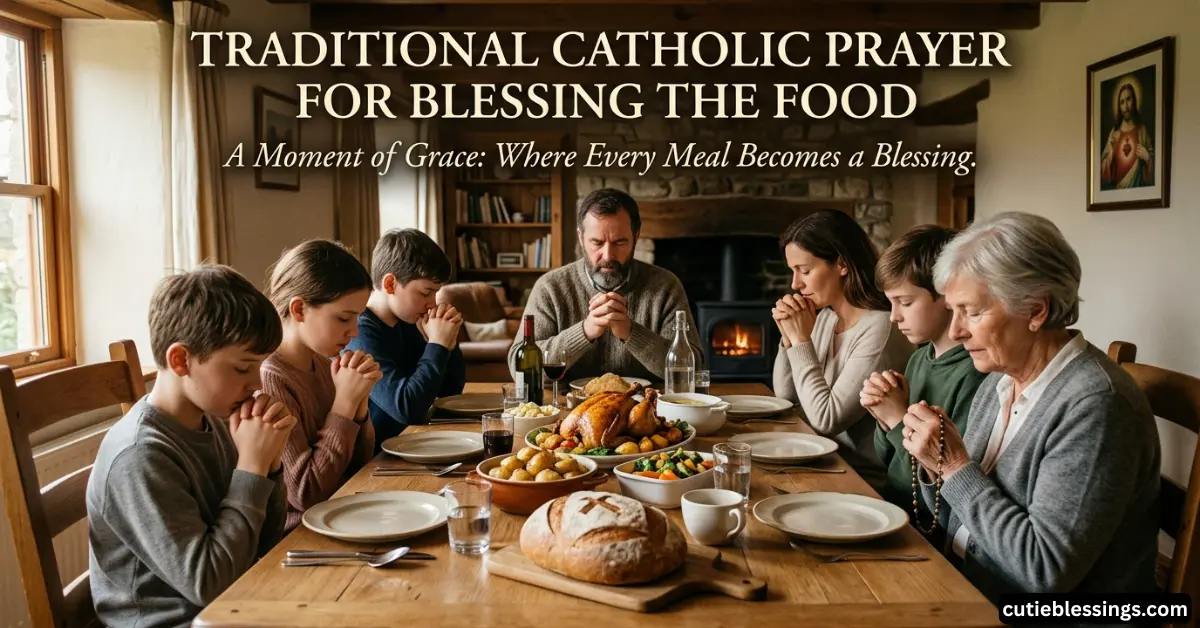
The most recognized version of the Catholic Prayer for Blessing the Food Before Meals is simple and widely used in both the United States and the United Kingdom.
Bless us, O Lord, and these Thy gifts, which we are about to receive from Thy bounty, through Christ our Lord. Amen.
Why This Prayer Remains Timeless
- It is short and easy to remember
- It acknowledges God as the source of all blessings
- It is suitable for both formal and informal settings
- It can be used in family homes, restaurants, or gatherings
Even though it is brief, its meaning is deep. It reflects humility, gratitude, and trust.
A Powerful Catholic Prayer for Blessing the Food Before Meals
For those who prefer a more expressive version, a Powerful Catholic Prayer for Blessing the Food Before Meals can include additional gratitude and reflection.
Heavenly Father, we come before You with thankful hearts. We bless You for the food before us, for the hands that prepared it, and for the blessings You provide each day. Nourish our bodies and strengthen our spirits. Help us to remember those who are in need and to share generously with others. May this meal bring peace, unity, and joy to all who are gathered here. Amen.
What Makes This Version Meaningful
This expanded prayer is often used in family homes in the US and UK where meals are shared regularly. It includes:
- Gratitude for food and people
- Awareness of those less fortunate
- A request for peace and unity
- A spiritual connection beyond physical nourishment
It is especially meaningful during holidays, Sunday dinners, or gatherings with guests.
Cultural Importance in the United States and United Kingdom

In both the US and UK, Catholic prayer before meals has adapted to modern lifestyles while maintaining its spiritual roots.
In the United States
In American Catholic families, mealtime prayer is often encouraged as part of family values. It is commonly practiced during:
- Family dinners
- Holiday celebrations such as Thanksgiving and Christmas
- School or church gatherings
Many parents in the US see it as a way to teach children gratitude and discipline.
In the United Kingdom
In the UK, Catholic traditions tend to be more private and understated, but mealtime prayer still plays an important role in many households. It is often:
- Short and simple
- Integrated into daily routine without formality
- Used as a quiet moment of reflection before eating
In both cultures, the purpose remains the same: to bring awareness and gratitude into everyday life.
How to Lead a Catholic Prayer for Blessing Food
Saying a Catholic Prayer for Blessing the Food Before Meals does not require special training or formal leadership. Anyone can do it.
Step 1: Pause Before Eating
Take a moment of silence before beginning the meal. This signals a shift from routine to reflection.
Step 2: Speak Clearly and Calmly
The prayer should be spoken with intention, not rushed. Even a short prayer has meaning when said sincerely.
Step 3: Include Everyone Present
When praying with others, make sure everyone feels included, whether they actively participate or simply listen respectfully.
Step 4: Maintain Consistency
Regular practice makes the prayer a natural part of daily life.
Personalizing the Prayer for Modern Life
While traditional prayers are important, many families in the US and UK personalize their Catholic Prayer for Blessing the Food to reflect their lives.
Adding Daily Gratitude
You can mention specific events from the day, such as:
- A successful workday
- Safe travel
- Family health and wellbeing
Including Others in Need
A meaningful prayer often includes awareness of others:
- Those experiencing hunger
- People facing hardship
- Communities in need of support
Keeping It Natural
Personalization should never feel forced. The goal is sincerity, not perfection.
Teaching Children the Value of Mealtime Prayer

In many Catholic families, especially in the US and UK, teaching children to say a Catholic Prayer for Blessing the Food Before Meals is an important tradition.
Simple Starting Version
Thank You, Lord, for this food. Bless us and help us to be kind. Amen.
Why It Matters for Children
- Builds early habits of gratitude
- Encourages mindfulness before eating
- Strengthens family bonding
- Introduces faith in a natural way
Children who grow up with this practice often carry it into adulthood.
Creating a Meaningful Mealtime Environment
A prayer becomes more impactful when the environment supports it.
Reducing Distractions
Turning off televisions and putting away phones helps create a focused moment.
Encouraging Conversation After Prayer
After saying grace, families often engage in meaningful conversation, strengthening relationships.
Practicing Gratitude Throughout the Meal
The prayer sets the tone, but appreciation continues through the entire dining experience.
Common Mistakes to Avoid
Even though a Catholic Prayer for Blessing the Food is simple, there are a few things to avoid.
Treating It as a Routine Only
Prayer should not become mechanical. Sincerity is essential.
Overcomplicating the Words
Simple language is often more powerful than long or complex phrases.
Rushing the Moment
Taking time is important. Even a brief pause can change the tone of the meal.
The Spiritual and Emotional Benefits

Regularly saying a Catholic Prayer for Blessing the Food Before Meals has lasting effects.
Emotional Balance
It creates a sense of calm before eating, especially after stressful days.
Stronger Relationships
Shared prayer strengthens bonds between family members and guests.
Increased Gratitude
Over time, individuals become more aware of daily blessings.
Mindful Living
It encourages people to slow down and appreciate simple moments.
You can also read: Bless Us O Lord and These Thy Gifts Meaning and Secrets
Conclusion
A Powerful Catholic Prayer for Blessing the Food Before Meals is more than a tradition. It is a meaningful practice that brings gratitude, awareness, and connection into everyday life. In both the United States and the United Kingdom, this simple prayer continues to hold value because it fits seamlessly into modern routines while offering something timeless: a moment of peace.
Whether spoken in a busy American household, a quiet British dining room, or a gathering with guests, the prayer serves the same purpose. It reminds us that food is a blessing, time together is valuable, and gratitude should never be overlooked.
The beauty of this practice lies in its simplicity. It does not require perfect words or long rituals. It only requires sincerity. When spoken from the heart, even the shortest prayer can transform an ordinary meal into a meaningful experience.
By making this habit part of daily life, individuals and families not only honor tradition but also create a deeper sense of appreciation and connection that extends far beyond the dining table.
FAQs:
What is the Catholic prayer to bless food?
The most common Catholic prayer to bless food is:
“Bless us, O Lord, and these Thy gifts, which we are about to receive from Thy bounty, through Christ our Lord. Amen.”
This traditional prayer is widely used in Catholic homes before meals. It expresses gratitude to God for providing food and acknowledges Him as the source of all blessings.
How to pray for a person with schizophrenia?
In Catholic prayer, you can pray for healing, peace, and strength for someone living with schizophrenia. A simple example is:
Heavenly Father, we lift up this person into Your loving care. Please grant them peace of mind, strength in their struggles, and comfort in moments of distress. Guide their doctors, support their family, and surround them with Your healing presence. Amen.
In Catholic understanding, prayer does not replace medical care but works alongside it, asking for both spiritual and practical support.
How to pray a blessing over food?
To bless food in a Catholic way, simply pause before eating and pray with gratitude and reverence. You may use a traditional or personal prayer.
Example:
Lord God, we thank You for this food and for Your constant care. Bless this meal and those who prepared it. May it nourish our bodies and strengthen our hearts. Amen.
The key is sincerity, not length or complexity.
How to give thanks before a meal the Catholic way?
The Catholic way of giving thanks before meals involves pausing, recognizing God’s provision, and saying a short prayer of gratitude.
This can be:
A traditional grace before meals
A personal prayer of thanksgiving
A family prayer shared together
The focus is always on acknowledging God as the source of all blessings and expressing gratitude for food and fellowship.
How do you say grace before meals Catholic?
Saying grace in the Catholic tradition usually involves a short prayer before eating. The most common form is:
“Bless us, O Lord, and these Thy gifts, which we are about to receive from Thy bounty, through Christ our Lord. Amen.”
Families may also add personal intentions or thanksgiving depending on the occasion.
Why do Catholics bless their food?
Catholics bless their food as an act of gratitude and recognition that all provisions come from God. It is rooted in Scripture and Church tradition, where giving thanks is a central expression of faith.
Blessing food helps:
Cultivate gratitude and humility
Acknowledge God’s provision
Strengthen family and communal prayer life
Transform everyday meals into spiritual moments
It is not just a ritual, but a reminder to remain thankful in daily life.

