

Legal writing can feel intimidating, especially when every citation detail seems to matter. One small formatting mistake in a Bluebook block quote can make an otherwise strong paper look careless or incomplete.
The good news is that learning how to format a Bluebook block quote is not as difficult as many students believe. Once you understand the purpose behind block quotations and follow a few consistent rules, your writing becomes clearer, more professional, and much easier to read. Whether you are a first-year law student, a paralegal, a legal researcher, or someone working on academic legal writing, mastering this skill can instantly improve the quality of your work.
In legal documents, precision matters. A properly formatted Bluebook block quote shows attention to detail and respect for legal writing standards. It also helps readers quickly identify long quoted material without confusion. This article will walk you through everything you need to know, from the basic rules to practical examples, common mistakes, and helpful formatting tips you can apply immediately.
Table of Contents
What Is a Bluebook Block Quote?
A Bluebook block quote is a long quotation formatted separately from the main body of text. Instead of placing the quote inside quotation marks, the quoted material is indented and displayed as its own block.
This style is commonly used in legal writing when quoting lengthy passages from cases, statutes, law review articles, or other legal sources. The purpose is to make long quotations easier to read while clearly distinguishing them from your own analysis.
In most legal writing situations, a block quote is used when the quoted text reaches 50 words or more. However, some professors, courts, or institutions may follow slightly different guidelines, so it is always wise to check local rules or assignment instructions.
Why Block Quotes Matter in Legal Writing
Block quotes are more than formatting requirements. They improve readability and organization in legal documents.
A properly formatted Bluebook block quote helps readers:
- Identify quoted material instantly
- Separate legal authority from personal analysis
- Understand important language from cases or statutes
- Follow complex legal arguments more easily
In legal practice and academic work, credibility often depends on precision. Clean formatting demonstrates professionalism and careful research.
Understanding the Basic Bluebook Block Quote Rules
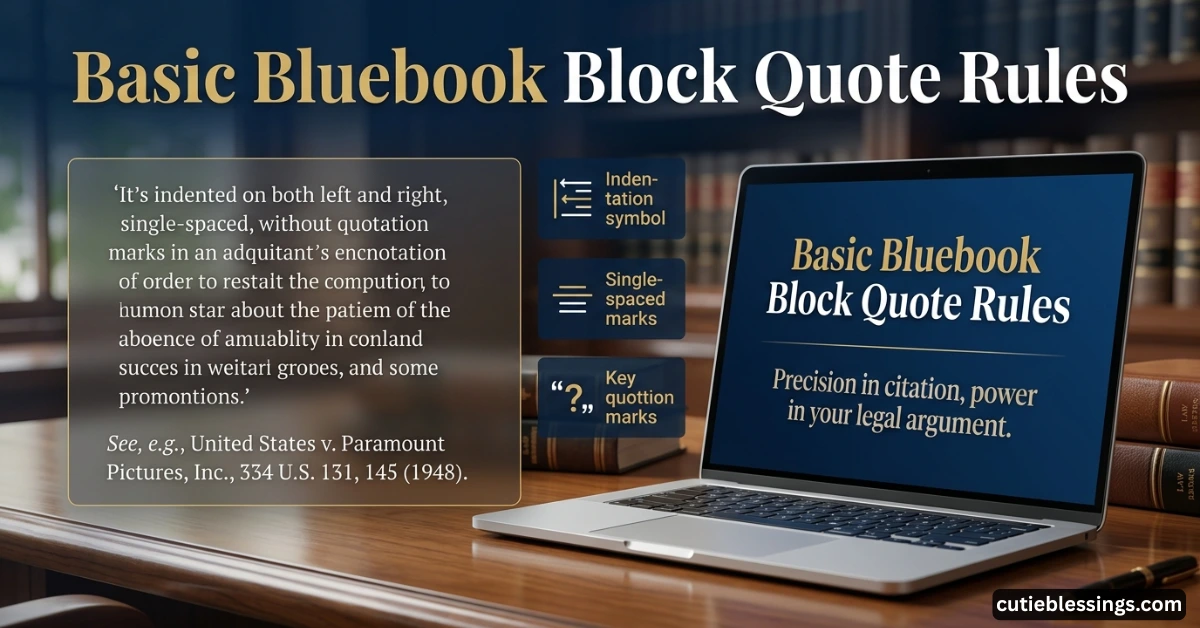
Before formatting your first block quote, it helps to understand the core rules behind this citation style.
When to Use a Block Quote
Generally, you should use a block quote when:
- The quotation is 50 words or longer
- The quoted language is especially important
- The exact wording matters legally
- Rewriting the material could weaken its meaning
Shorter quotations are usually placed directly into the paragraph using quotation marks.
Indentation Rules
The defining feature of a Bluebook block quote is indentation.
The entire quotation should be indented from the left margin. In many formats, the quote is single-spaced and separated from the main text by spacing before and after the quote.
The exact spacing can vary depending on court rules, law review standards, or professor instructions.
No Quotation Marks
One of the most common mistakes students make is leaving quotation marks around a block quote.
In Bluebook style, block quotes do not require quotation marks because the indentation already signals that the text is quoted material.
Citation Placement
The citation typically appears after the final punctuation of the block quote.
This is another area where beginners often make errors. The citation is not usually placed before the period in legal block quotations.
How to Format a Bluebook Block Quote Step by Step
Learning the process step by step makes block quote formatting much easier.
Step 1: Introduce the Quote Clearly
Never drop a block quote into your paper without context.
Before the quotation, explain:
- Who is speaking
- Why the quote matters
- How it supports your argument
For example:
The court emphasized the importance of fairness in contractual interpretation:
Then the block quote follows.
This transition helps the reader understand why the quoted material deserves attention.
Step 2: Start the Quote on a New Line
A Bluebook block quote should begin on its own line below the introductory sentence.
Do not continue the quote within the same paragraph line.
Step 3: Indent the Entire Quote
Indent every line of the quoted text consistently.
The indentation visually separates the quote from your original writing.
Step 4: Remove Quotation Marks
Do not place quotation marks around the block quote unless there is a quotation inside the quoted material itself.
This rule helps maintain clean formatting.
Step 5: Add the Citation Correctly
After the final punctuation, place the citation according to Bluebook citation rules.
Accuracy matters here because incorrect citation placement can weaken the professionalism of the document.
Example of a Proper Bluebook Block Quote

Seeing an example often makes the formatting rules easier to understand.
Here is a simplified example structure:
The court explained the principle clearly:
”Freedom of speech does not protect every form of expression equally. Certain categories of speech may receive limited constitutional protection when public safety or unlawful conduct becomes involved. Smith v. State, 456 U.S. 789, 795 (2022).”
Notice several important details:
- The quote starts on a new line
- The text is indented
- There are no quotation marks
- The citation follows the quote
This clean structure improves readability and professionalism.
Common Mistakes in Bluebook Block Quotes
Many legal writers struggle with the same formatting problems. Understanding these mistakes early can save time and frustration.
Using Quotation Marks Incorrectly
Because regular quotations use quotation marks, students often carry that habit into block quotes.
Remember that block quotes replace quotation marks with indentation.
Forgetting to Introduce the Quote
A block quote should never appear without explanation.
Readers need context to understand why the quoted language matters. A brief introduction creates smoother flow and stronger legal analysis.
Improper Citation Placement
Incorrect citation placement is one of the most common Bluebook errors.
Always review the latest citation rules and ensure the citation appears in the correct position after the quote.
Overusing Block Quotes
Long quotations can become overwhelming if used too often.
Strong legal writing balances quoted authority with original analysis. Use block quotes strategically rather than relying on them to fill space.
Quoting Unnecessary Language
Some writers include entire paragraphs when only one sentence is relevant.
Choose only the most meaningful portion of the source. This keeps your writing focused and easier to follow.
When You Should Avoid a Block Quote
Not every legal quotation deserves block formatting.
Sometimes paraphrasing is more effective, especially when:
- The quoted material is overly long
- Only a small idea matters
- The wording itself is not legally important
- The quote interrupts the flow of your writing
Good legal writers know when to quote directly and when to summarize.
Bluebook Block Quotes in Law School Writing

Law students encounter block quotes constantly in memos, briefs, research papers, and journal assignments.
Understanding how professors evaluate block quote usage can help improve grades and writing quality.
Professors Look for Precision
Legal instructors often notice formatting errors immediately.
Correct Bluebook formatting signals careful attention to detail, which is highly valued in legal education.
Clarity Matters More Than Length
Some students believe long quotations make papers sound smarter.
In reality, professors usually prefer concise analysis supported by carefully selected authority. A strong block quote should support your argument, not replace it.
Editing Is Essential
Even experienced law students revise block quotes multiple times.
Before submitting any document:
- Check spacing
- Verify indentation
- Review citations
- Confirm word count requirements
- Remove unnecessary quoted material
Small corrections can significantly improve presentation.
Practical Tips for Writing Better Block Quotes
Formatting is only one part of using block quotes effectively. Strong legal writers also know how to integrate quotations smoothly into their arguments.
Use Block Quotes Sparingly
A page full of indented text can overwhelm readers.
Use block quotes only when the precise language truly matters.
Analyze the Quote Afterward
One major mistake is adding a block quote without explanation afterward.
Always follow the quote with analysis. Explain:
- Why the quote matters
- What legal principle it establishes
- How it supports your argument
This shows critical thinking rather than simple copying.
Keep Quotes Relevant
Every quoted section should directly support your point.
If part of the quote is unnecessary, shorten it or paraphrase instead.
Maintain Consistent Formatting
Inconsistent spacing and indentation make documents appear careless.
Before submitting legal writing, review the formatting carefully from beginning to end.
Understanding the Purpose Behind Bluebook Formatting
Many students memorize rules without understanding why those rules exist.
Bluebook formatting exists to create consistency across legal writing. Courts, law firms, professors, and researchers all benefit from standardized formatting because it improves readability and efficiency.
A properly formatted Bluebook block quote:
- Highlights authoritative language
- Separates source material from commentary
- Makes documents easier to scan
- Supports professional communication
When readers can quickly identify quoted legal authority, they spend less time decoding formatting and more time understanding the argument.
Block Quotes in Different Legal Documents
The use of block quotes can vary slightly depending on the type of legal document you are preparing.
Legal Memoranda
In legal memos, block quotes are often used to highlight controlling authority or important judicial reasoning.
However, excessive quoting can weaken the analytical strength of the memo. Balance is essential.
Court Briefs
In briefs, lawyers often use block quotes to emphasize persuasive language from precedent cases.
Judges appreciate concise writing, so block quotes should remain focused and purposeful.
Law Review Articles
Law review writing may include more extensive use of block quotations, especially when analyzing detailed legal arguments or historical cases.
Accuracy becomes especially important in academic publications.
Judicial Opinions
Judges themselves sometimes use block quotes when discussing precedent or statutory interpretation.
Studying published opinions can help students understand how experienced legal writers use quotations effectively.
How Technology Affects Bluebook Block Quote Formatting
Modern legal writing tools have made formatting easier, but they can also create new problems.
Word Processors Are Helpful but Imperfect
Programs like Microsoft Word can automatically indent text, but automatic formatting is not always reliable.
Always review block quotes manually after formatting.
Copy-and-Paste Errors
When copying legal text from online databases, spacing issues often appear.
Carefully check:
- Extra spaces
- Incorrect line breaks
- Font inconsistencies
- Missing punctuation
These small issues can damage the professional appearance of legal writing.
Citation Software Limitations
Citation tools can save time, but they are not perfect.
Even automated citation systems should be reviewed carefully for Bluebook compliance.
Advanced Tips for Stronger Legal Writing
Once you understand basic block quote formatting, you can improve how you use quotations strategically.
Quote Only the Most Powerful Language
The strongest legal writers identify the exact sentence that carries the most persuasive value.
Instead of quoting entire paragraphs, focus on the language that directly strengthens your point.
Blend Quotes Into Your Argument
A good block quote feels connected to the surrounding discussion.
Introduce the quote naturally and explain it afterward so readers understand its significance.
Avoid Citation Overload
Too many citations inside or around block quotes can interrupt readability.
Keep your formatting clean and organized.
Read Your Writing Aloud
Reading legal writing aloud helps identify awkward transitions around quotations.
If the block quote interrupts the natural flow, revise the surrounding sentences.
Real-Life Situations Where Block Quotes Matter
Many people think Bluebook formatting only matters in law school, but accurate legal formatting has practical value in real professional settings.
Internship Applications
Legal employers often review writing samples carefully.
A properly formatted block quote can demonstrate professionalism and attention to detail.
Court Filings
Incorrect formatting in court submissions can reflect poorly on attorneys and legal teams.
Even small citation mistakes may reduce credibility.
Academic Publishing
Students interested in publishing legal articles must follow formatting standards closely.
Editors expect accurate citation and quotation practices.
Legal Research Careers
Researchers and legal analysts rely on consistent formatting to communicate clearly with colleagues and clients.
Strong formatting habits improve efficiency and professionalism.
Reader Benefits of Learning Bluebook Block Quotes

Mastering this skill offers benefits far beyond formatting alone.
Increased Confidence
Many students feel nervous about legal writing because citation rules seem overwhelming.
Once you understand block quote formatting, legal writing becomes much less intimidating.
Better Communication
Clear formatting helps readers focus on your argument rather than distracting technical mistakes.
Stronger Academic Performance
Attention to detail often improves grading outcomes in legal writing courses.
Professional Growth
Strong citation habits developed early can support long-term success in legal careers.
Quick Checklist for Formatting a Bluebook Block Quote
Before finalizing your document, review this checklist:
- Is the quote 50 words or longer?
- Did you introduce the quote properly?
- Is the quote on a new line?
- Is the entire quote indented consistently?
- Did you remove quotation marks?
- Is the citation correctly placed?
- Did you explain the quote afterward?
- Does the quote directly support your argument?
This simple review process can help catch many common errors.
You can also read: Bluebook Block Quotes Secrets Every Writer Must Know
Final Thoughts
Learning how to format a powerful Bluebook block quote is one of the most valuable skills in legal writing. At first, the rules may seem strict or overly technical, but they exist for a reason. Clear formatting improves communication, strengthens professionalism, and helps readers focus on the legal ideas that matter most.
The key is not just memorizing formatting rules but understanding how quotations support persuasive legal analysis. A strong block quote should clarify your argument, highlight important authority, and fit naturally into the flow of your writing.
As you continue practicing legal writing, you will become more comfortable choosing meaningful quotations, formatting them correctly, and using them strategically. Over time, these small technical skills become part of a larger professional habit: writing with clarity, precision, and confidence.
Careful formatting may seem like a minor detail, but in legal writing, details often shape credibility. The effort you invest in mastering Bluebook block quotes today can strengthen every memo, brief, paper, and professional document you write in the future.
FAQs:
How do you format a Bluebook block quote?
A Bluebook block quote is usually used for quotations that are 50 words or longer. The quote should start on a new line, be indented, and not include quotation marks. The citation is typically placed after the final punctuation.
How do you use brackets when quoting someone?
Brackets are used to add, clarify, or change words inside a quotation without altering the original meaning. For example, you can use brackets to explain pronouns or adjust capitalization. In legal writing, brackets help make quoted text clearer and grammatically correct.
How do I cite a block quote in legal writing?
To cite a block quote, place the full legal citation after the quoted text according to Bluebook rules. The citation usually comes after the final punctuation of the block quote. Always double-check spacing, case names, and page numbers for accuracy.
Are Bluebook block quotes justified?
Most Bluebook block quotes are left-indented and aligned consistently with the document format. Full justification depends on court rules, law school guidelines, or document settings. Many legal documents use left-aligned formatting for easier readability.
How do you create a proper block quote?
Start by introducing the quotation in your sentence, then place the quote on a new indented line. Remove quotation marks and keep the formatting consistent throughout the document. A proper Bluebook block quote should clearly separate quoted material from your own writing.