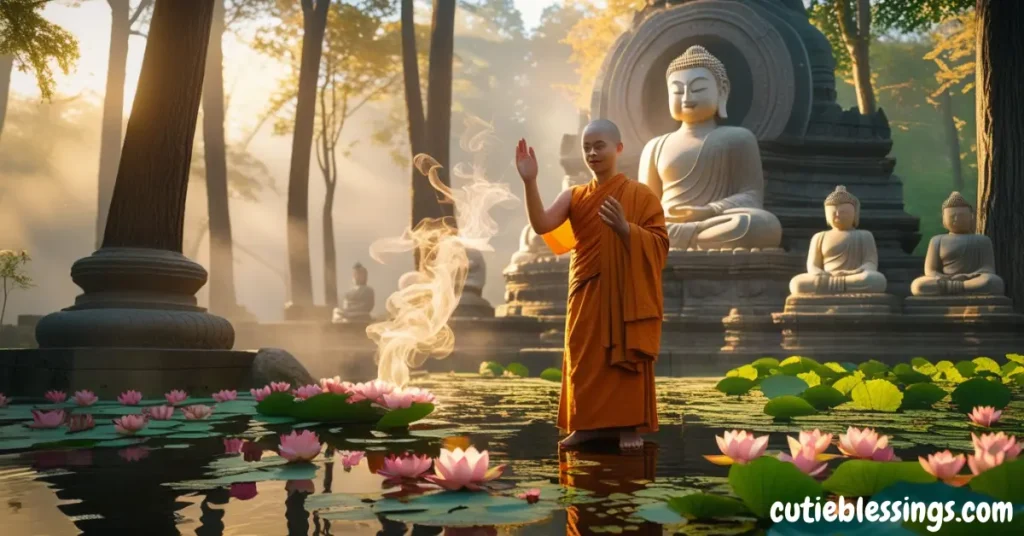
Buddhism is a spiritual path that has inspired millions of people across the world. It teaches peace, compassion, and mindfulness in everyday life. But one of the most beautiful and often misunderstood aspects of Buddhism is the idea of blessings.
When people think of blessings, they often imagine someone giving divine favor or luck — something like “May you be blessed.” In Buddhism, however, blessings hold a much deeper and more mindful meaning. They are not just words or rituals; they are reflections of inner transformation, good karma, and spiritual connection.
In this article, we’ll explore the hidden meaning behind blessings in Buddhism, how they differ from other religious blessings, and how they shape a Buddhist’s journey toward enlightenment. We’ll also look at how you can invite more blessings into your own life through mindfulness, compassion, and wisdom.
Table of Contents
What Does a Blessing Mean in Buddhism?
In simple words, a blessing in Buddhism is not about receiving something from a god or divine being. Instead, it’s about the positive energy that arises from good intentions, right actions, and pure thoughts.
When a monk blesses someone, or when a person recites Buddhist prayers, what’s really happening is the sharing and spreading of wholesome energy (Punya). This energy is created through karma — the law of cause and effect — and it brings peace, harmony, and happiness.
So, unlike other traditions where blessings are “granted,” in Buddhism they are cultivated. You create your own blessings by living mindfully, speaking kindly, and acting compassionately.
The Deeper Spiritual Essence of Blessings
At its heart, Buddhism teaches that everything is interconnected. Your thoughts, words, and actions influence not only your life but also the lives of others. This understanding lies at the core of Buddhist blessings.
When you generate good thoughts or perform acts of kindness, you produce merit — a form of spiritual wealth. This merit becomes a source of blessing, bringing balance, clarity, and peace.
In this way, blessings in Buddhism are not external gifts — they are the natural outcome of inner goodness.
For example:
- When you meditate, you bless yourself with inner calm.
- When you forgive someone, you bless your heart with peace.
- When you help others, you bless the world with compassion.
This is the hidden beauty of blessings in Buddhism — they come from within, not from outside.
The Connection Between Blessings and Karma
To truly understand Buddhist blessings, we need to understand karma.
Karma means “action.” Every action — whether through thought, speech, or behavior — creates an effect. When you act with kindness and sincerity, your karma becomes positive, and positive karma leads to blessings.
This doesn’t mean blessings are a reward. Instead, they are the natural fruit of your actions. If you plant good seeds, you grow good fruits. In the same way, good karma brings peace, joy, and protection — the real blessings of life.
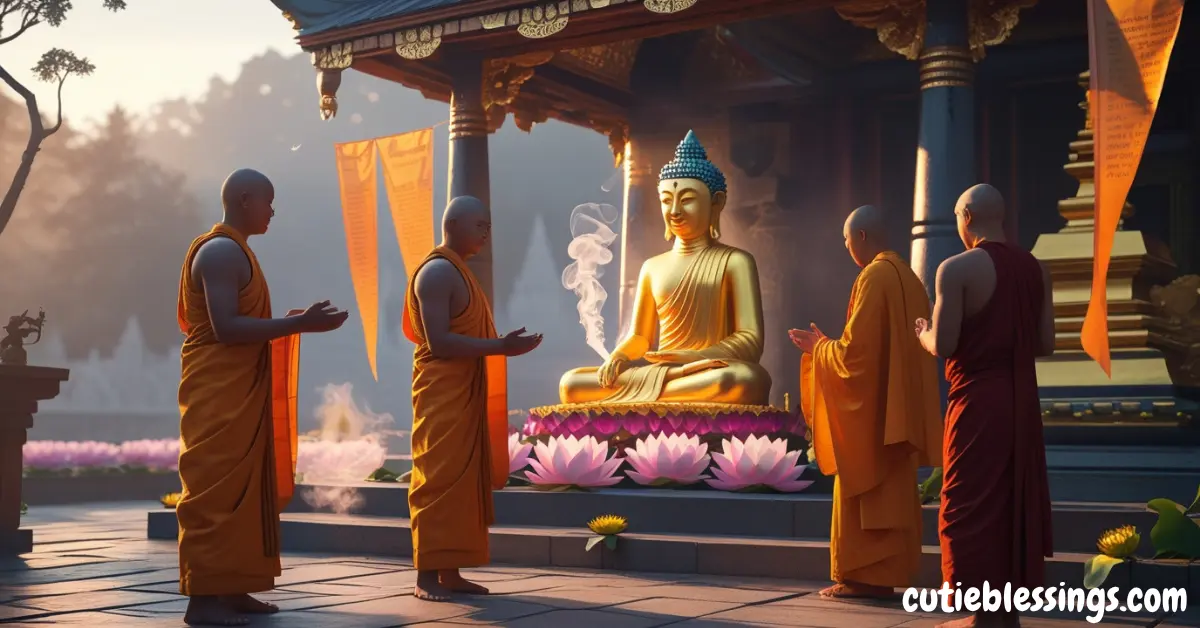
That’s why in Buddhism, monks often chant or share blessings at the end of a ceremony or meditation. These blessings are meant to direct the positive energy created toward all beings, spreading harmony and goodwill everywhere.
Types of Blessings in Buddhism
Buddhist blessings appear in many forms — from rituals and chants to thoughts and acts of kindness. Here are some of the most common forms of blessings you’ll find across Buddhist traditions:
1. Verbal Blessings
When monks recite mantras or sutras, the vibration of their words is believed to spread positive energy. Chanting words like “Sabbe Satta Sukhi Hontu” (May all beings be happy) radiates compassion and peace to all living things.
2. Blessing by Water
In many temples, monks bless water through chanting. The blessed water is then sprinkled on people or taken home as a symbol of purification and protection. The idea is that the pure intentions of the monk infuse the water with positive energy.
3. Blessing by Touch
Sometimes, monks bless people by placing their hands on their heads or shoulders. This act symbolizes the transmission of spiritual energy, compassion, and guidance.
4. Blessings through Symbols
Buddhist symbols such as the Lotus Flower, Stupa, or Buddha Statue also represent blessings. They remind practitioners of purity, awakening, and the path toward enlightenment.
5. Blessings through Deeds
Perhaps the most important form of blessing is through actions. Helping someone in need, offering food to monks, or simply smiling at a stranger — all these create blessings that ripple through your life and the world around you.
The Role of Monks and Nuns in Giving Blessings
In Buddhism, monks and nuns are respected not because they hold supernatural power, but because they dedicate their lives to mindfulness, compassion, and purity. Their spiritual discipline gives strength to their words and presence.
When they chant a blessing, it’s not magic — it’s mindful energy at work. Their pure hearts and deep meditation amplify the positive vibrations that surround everyone listening.
Receiving a monk’s blessing is therefore a reminder — not that you’ve been gifted something divine, but that you too can nurture purity, wisdom, and kindness within yourself.
Popular Buddhist Blessing Chants and Their Meanings
Buddhist chants often serve as both blessings and meditations. Here are some well-known ones and what they signify:
1. “Metta Sutta” (Loving-Kindness Discourse)
This chant expresses universal love and goodwill toward all beings. It’s often recited to bless oneself and others with peace and happiness.
Meaning:
“May all beings be happy.
May all beings be free from suffering.
May all beings live in peace.”
2. “Sabbe Satta Sukhi Hontu”
This short phrase is a common Buddhist blessing meaning “May all beings be happy.” It reminds us to extend compassion to everyone — humans, animals, and even unseen beings.
3. “Om Mani Padme Hum”
This is the most famous mantra in Tibetan Buddhism. It is said to embody the compassion of the Buddha of Infinite Love, Avalokiteshvara.
Meaning:
“The jewel is in the lotus.”
It symbolizes the awakening of pure wisdom and compassion from within the heart.
4. “Namo Buddhaya”
This phrase means “Homage to the Buddha.” Saying it is both a blessing and a reminder of respect, humility, and devotion to the path of enlightenment.
The Hidden Meaning: Blessings as Energy and Awareness
So what is the hidden meaning behind blessings in Buddhism?
It’s this: Blessings are not gifts you receive, but energies you create.
They arise when your mind is calm, your heart is open, and your actions are good. The more mindful you are, the more blessings naturally flow into your life.
In essence, blessings in Buddhism are manifestations of awareness. When you live with mindfulness, gratitude, and compassion, you become a source of blessings — not just for yourself but for everyone around you.
That’s why Buddhist blessings are often shared through chants that say, “May all beings be free from suffering.” The focus is not on personal gain, but on universal well-being.
How to Invite Blessings into Your Daily Life
You don’t need to be a monk or visit a temple to experience blessings. In Buddhism, everyday life is filled with opportunities to create and share them.
Here are some simple ways to cultivate blessings in your own life:
1. Practice Gratitude
Start each day by being thankful. Gratitude transforms your mindset and opens your heart to receive and share positive energy.
2. Meditate Daily
Meditation helps clear your mind, balance your emotions, and connect you to your inner peace. A peaceful mind naturally attracts blessings.
3. Speak Kindly
Words carry power. Speak with honesty, compassion, and gentleness. Every kind word is a blessing in itself.
4. Do Good Deeds
Helping others without expecting anything in return creates immense merit. This merit becomes the foundation of your blessings.
5. Forgive and Let Go
Holding onto anger blocks the flow of blessings. Forgiveness frees your spirit and restores harmony.
6. Offer Loving-Kindness
Take a moment each day to silently wish well for others — even those you don’t know. This simple act radiates powerful positive energy.
7. Live Mindfully
When you eat, walk, or breathe with awareness, you bless the present moment. Mindfulness is the gateway to all inner blessings.
Blessings in Different Buddhist Traditions
While the essence of blessings is universal, each Buddhist tradition expresses it differently.
Theravada Buddhism
In countries like Thailand, Sri Lanka, and Myanmar, blessings are often performed by monks through chanting Pali scriptures. These chants focus on health, peace, and protection.
Mahayana Buddhism
In China, Japan, and Korea, blessings include rituals, sutra recitations, and offerings. They emphasize compassion and the interconnectedness of all beings.
Vajrayana (Tibetan) Buddhism
In Tibetan Buddhism, blessings involve mantras, visualizations, and empowerment ceremonies led by lamas. These are meant to awaken the divine potential within each practitioner.
Despite these differences, all forms share one truth — blessings come from purity of heart and right intention.
Blessings as Protection
Many people seek blessings for protection — from illness, bad luck, or negative energy. In Buddhism, protection comes not from external forces, but from the shield of good karma you build through your actions.
When you live ethically, follow the Five Precepts, and maintain mindfulness, your positive energy becomes your natural armor.
A pure heart and peaceful mind are stronger than any curse or misfortune. That’s why monks often say:
“The best protection is a good heart.”
Blessings Beyond Religion
Even if you don’t identify as Buddhist, the concept of blessings can still inspire you. The core idea — that positive energy comes from good intentions — is universal.
When you live kindly and mindfully, you create ripples of goodness that return to you in many forms. It could be through improved relationships, inner peace, or simply the joy of helping others.
That’s why Buddhist blessings aren’t bound by temples or rituals. They are alive in every smile, every kind gesture, and every moment of awareness.
The Modern Meaning of Blessings in Everyday Life
In today’s busy world, it’s easy to forget the quiet beauty of blessings. Many people chase luck or material success, hoping to be “blessed.” But true blessings in Buddhism aren’t about wealth or fame.
They’re about living with peace, compassion, and clarity — no matter what life brings.
A Buddhist blessing today can mean:
- Finding calm in chaos.
- Forgiving when it’s hard.
- Smiling despite challenges.
- Helping someone without expecting anything back.
These are the blessings that truly transform your life.
The Ultimate Blessing: Enlightenment
In the end, the highest blessing in Buddhism is enlightenment (Nirvana) — the complete liberation from suffering and ignorance.
Every small act of kindness, mindfulness, and compassion leads you one step closer to that goal. Each blessing you give or receive is part of your journey toward awakening.
So when Buddhists speak of blessings, they are not just wishing you good fortune — they are wishing you freedom, wisdom, and peace.
Final Thoughts
The hidden meaning behind blessings in Buddhism is simple yet profound. Blessings are not about luck or miracles — they are about energy, awareness, and compassion.
You don’t have to wait for someone to bless you. You can create blessings right now — by being kind, mindful, and grateful.
Every smile, every act of forgiveness, and every moment of awareness becomes a blessing that lights up the world.
So the next time you hear the word blessing, remember:
You are both the giver and the receiver.
Your heart is the source.
And your actions are the path.
That is the true, hidden meaning behind blessings in Buddhism.