A Catholic Wedding Blessing is one of the most beautiful and sacred moments in a Catholic marriage ceremony. From the moment the couple kneels before the altar and the priest lifts his hands in prayer, heaven and earth meet in a single act of grace. It is a moment that transforms a wedding from a joyful celebration into a profound encounter with God’s love.
It is more than a simple prayer. It is a solemn invocation of God’s grace upon the couple, their union, and their future family life.
For many couples, understanding the Catholic Wedding Blessing adds depth and meaning to their wedding day. Whether you are preparing for marriage, attending a ceremony, or simply learning about Catholic traditions, this guide explains everything in a clear and practical way.
In this in-depth article, you will discover the meaning behind the Catholic Wedding Blessing, how it fits within the sacrament of marriage, its scriptural roots, the traditions surrounding it, and how couples can prepare for it thoughtfully.
Table of Contents
What Is a Catholic Wedding Blessing?
A Catholic Wedding Blessing is a formal prayer given by a priest or deacon during a Catholic marriage ceremony. It asks God to bless the couple’s covenant, strengthen their love, and guide them throughout their married life.
In the Catholic Church, marriage is not just a contract. It is a sacrament. The blessing is a central part of that sacramental celebration.
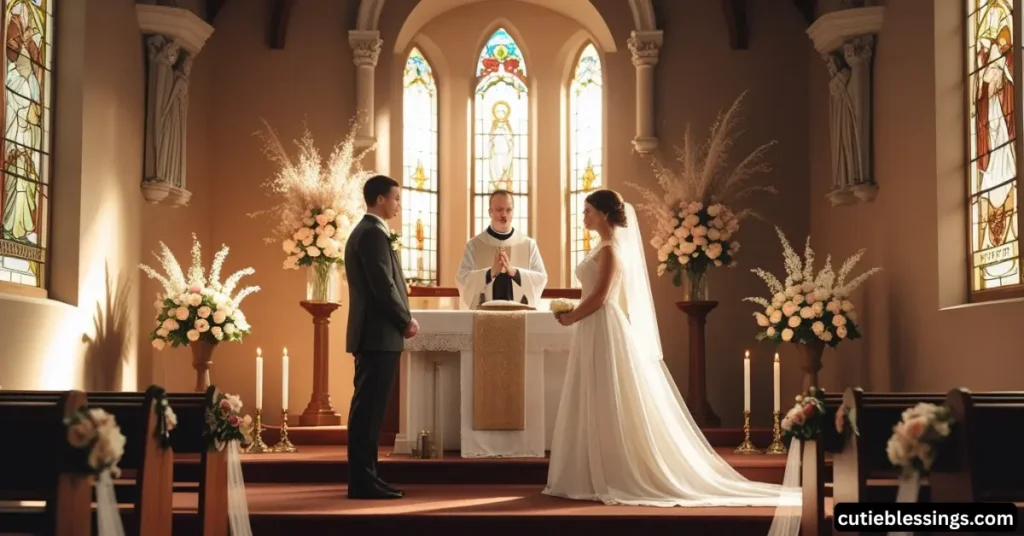
The most well-known form of the Catholic Wedding Blessing is the Nuptial Blessing. This special prayer is prayed over the couple after they exchange vows. It calls down divine grace upon the husband and wife.
The blessing is rooted in the belief that marriage mirrors Christ’s love for the Church. Because of this, the words are rich with biblical meaning and spiritual depth.
The Sacramental Meaning of Marriage in Catholic Teaching
To understand the Catholic Wedding Blessing fully, it is important to understand how the Church views marriage.
In Catholic theology:
- Marriage is a sacrament instituted by Christ.
- It is a lifelong covenant.
- It is ordered toward the good of the spouses.
- It is open to the gift of children.
The blessing affirms all of these realities. It asks God to:
- Unite the couple in faithful love.
- Strengthen them in times of difficulty.
- Make their home a place of peace and holiness.
- Bless them with fruitfulness, if it is His will.
The Catholic Wedding Blessing is not symbolic only. It is believed to communicate real spiritual grace to the couple.
Where the Catholic Wedding Blessing Happens in the Ceremony
The Catholic Wedding Blessing typically occurs during the Liturgy of the Eucharist in a full Nuptial Mass. However, it can also take place during a wedding ceremony outside of Mass.
Here is the general structure of a Catholic wedding ceremony:
1. Entrance Rite
The priest welcomes the couple and guests.
2. Liturgy of the Word
Scripture readings are proclaimed.
3. Exchange of Consent
The couple exchanges vows.
4. Exchange of Rings
Rings are blessed and exchanged.
5. Nuptial Blessing
This is the formal Catholic Wedding Blessing.
6. Liturgy of the Eucharist
If it is a Mass, Holy Communion follows.
The Nuptial Blessing is one of the most solemn and powerful moments of the celebration.
The Nuptial Blessing Explained
The Nuptial Blessing is the heart of the Catholic Wedding Blessing tradition.
During this prayer:
- The couple kneels.
- The priest extends his hands over them.
- He prays a structured blessing from the Roman Missal.
The prayer includes themes such as:
- Creation and God’s design for marriage.
- The example of holy couples in Scripture.
- Fidelity and lifelong commitment.
- Unity of heart and mind.
- Fruitfulness and family life.
The language often refers to Adam and Eve, Abraham and Sarah, and Christ’s love for the Church. These references remind the couple that their marriage is part of God’s greater plan of salvation.
Biblical Foundations of the Catholic Wedding Blessing
The Catholic Wedding Blessing is deeply rooted in Scripture.
Genesis
The creation account shows that marriage was part of God’s design from the beginning. “The two shall become one flesh” forms the foundation of Catholic marriage teaching.
The Book of Tobit
The story of Tobiah and Sarah is often referenced in Catholic weddings. Their prayer together on their wedding night emphasizes faith, trust, and purity.
The Gospels
Jesus attended the Wedding at Cana. His presence there affirms the goodness of marriage.
Ephesians
Saint Paul compares marriage to Christ’s love for the Church. This imagery shapes the theology behind the Catholic Wedding Blessing.
Because of these scriptural roots, the blessing is not merely tradition. It is grounded in biblical revelation.
Different Forms of Catholic Wedding Blessings
There are variations depending on the circumstances of the marriage.
Nuptial Mass Blessing
Given during a full Mass when both parties are Catholic.
Wedding Ceremony Outside Mass
If one party is not Catholic, the ceremony may take place without the Eucharist, but the blessing remains.
Convalidation Blessing
If a couple previously married outside the Church and later seeks to have their marriage recognized sacramentally, a blessing is included in the convalidation ceremony.
Anniversary Blessings
Married couples can receive a special blessing during milestone anniversaries.
Each form reflects the Church’s pastoral care and commitment to strengthening marriages.
Symbolism Within the Catholic Wedding Blessing
The Catholic Wedding Blessing includes rich symbolism.
Laying on of Hands
The priest extending his hands represents invoking the Holy Spirit.
Kneeling
The couple kneels as a sign of humility before God.
Scriptural Language
The words recall salvation history, connecting the couple to generations of believers.
Communal Witness
The congregation witnesses and silently supports the blessing.
These elements emphasize that marriage is both personal and communal.
Why the Catholic Wedding Blessing Matters
The blessing is not a decorative addition to the ceremony. It serves vital spiritual purposes.
It Strengthens the Couple Spiritually
The Church teaches that sacramental grace helps spouses love selflessly.
It Connects Marriage to Faith
The blessing reminds couples that God is central to their relationship.
It Invites Divine Guidance
Marriage involves challenges. The blessing asks for perseverance, patience, and mercy.
It Establishes a Spiritual Foundation
A marriage rooted in faith often develops deeper resilience.
Preparing for a Catholic Wedding Blessing
Couples preparing for marriage in the Catholic Church go through a period of formation.
Pre Cana or Marriage Preparation
Most dioceses require engaged couples to attend marriage preparation programs.
These typically include:
- Theology of marriage
- Communication skills
- Conflict resolution
- Family planning
- Prayer life
Understanding the Catholic Wedding Blessing during preparation helps couples appreciate its depth.
Choosing Readings
Couples usually select Scripture readings that will be proclaimed during the ceremony.
These readings shape the tone of the blessing and homily.
Meeting with the Priest
Discussing the ceremony in advance ensures clarity about expectations and traditions.
The Role of the Community
A Catholic Wedding Blessing is not private. It takes place within the community of believers.
The congregation:
- Witnesses the vows.
- Prays for the couple.
- Supports them spiritually.
Marriage in Catholic teaching strengthens the entire Church community. The blessing reflects this communal dimension.
Cultural Traditions and Catholic Wedding Blessings
Across different cultures, Catholic weddings may include additional customs that surround the central blessing.
Examples include:
- Arras coins in Hispanic traditions.
- The unity candle in some Western cultures.
- Wedding crowns in Eastern Catholic Churches.
While these customs vary, the Catholic Wedding Blessing remains the theological core of the ceremony.
The Long Term Impact of the Catholic Wedding Blessing
The blessing is not confined to the wedding day.
Many couples report that remembering the words of the Nuptial Blessing strengthens them during difficult times.
When conflicts arise, recalling the promises made before God can renew commitment.
The grace received in the sacrament continues to support the couple throughout life.
Tips for Couples to Deepen the Meaning of the Blessing
If you are preparing for marriage, consider these practical steps:
Reflect on the Readings Together
Discuss what each reading means for your relationship.
Pray as a Couple Before the Wedding
Developing a shared prayer habit prepares you spiritually.
Understand the Words of the Blessing
Ask your priest to explain key phrases.
See the Wedding as a Beginning
The blessing marks the start of a lifelong vocation.
Catholic Wedding Blessing and Family Life
The blessing explicitly mentions children and family life.
It asks that the couple:
- Be blessed with offspring.
- Raise children in faith.
- Create a home filled with love.
Even couples who face infertility find comfort in the broader spiritual fruitfulness the blessing invokes.
Marriage is meant to radiate love outward.
Challenges in Modern Marriage and the Role of Blessing
Today, many couples face pressures such as:
- Financial stress
- Work life imbalance
- Social expectations
- Cultural misunderstandings
The Catholic Wedding Blessing anchors marriage in something greater than circumstances.
It reminds couples that:
- Love is a decision, not just a feeling.
- Sacrifice is part of commitment.
- Faith provides strength beyond human ability.
How Guests Can Appreciate the Catholic Wedding Blessing
If you are attending a Catholic wedding:
- Pay attention to the Nuptial Blessing.
- Recognize it as a sacred moment.
- Offer your silent prayer for the couple.
Understanding the meaning behind the words enhances your participation.
The Timeless Beauty of the Catholic Wedding Blessing
The Catholic Wedding Blessing has remained consistent for centuries.
While cultural expressions change, the core theology does not.
Its endurance shows the Church’s commitment to:
- Lifelong fidelity
- Sacramental grace
- Faith centered family life
Couples who approach it thoughtfully often describe it as the most moving part of their wedding ceremony.
You can also read: Polish Wedding Blessing: The Ultimate Modern Guide
Conclusion
The Catholic Wedding Blessing is far more than a ceremonial prayer. It is a sacred invocation of God’s grace upon a lifelong covenant.
Rooted in Scripture, shaped by centuries of tradition, and grounded in sacramental theology, the blessing gives spiritual depth to Catholic marriage.
It unites husband and wife under God’s guidance. It strengthens them for challenges. It connects them to the Church community. It establishes a foundation for a faithful and fruitful family life.
For couples preparing to marry, understanding the Catholic Wedding Blessing transforms the wedding day from a beautiful event into a profound spiritual beginning.
When embraced fully, this blessing becomes not just a moment in time, but a lifelong source of grace, unity, and hope. It is a sacred gift that continues to guide, protect, and inspire couples throughout their journey of love and family life, reminding them that their marriage participates in God’s eternal plan.
FAQs:
What is the blessing for a Catholic wedding couple?
The Catholic wedding blessing is a prayer given by a priest or deacon asking God to strengthen the couple’s love, unite them in faith, and guide them in their married life. The most common form is the Nuptial Blessing, said after the couple exchanges vows.
Can you have a Catholic wedding blessing?
Yes. Any couple married in the Catholic Church receives a wedding blessing during the ceremony. Even if one spouse is not Catholic, the blessing can still be included following Church guidelines.
What is a good blessing for Catholics?
A good Catholic blessing asks God to bring love, faith, patience, and joy to the couple. For example: “May God bless your marriage with grace, strengthen your love, and guide you in all your days together.”
What do Catholics say when getting married?
During a Catholic wedding, couples exchange vows such as: “I take you to be my wife/husband, to have and to hold, from this day forward, for better or worse, for richer or poorer, in sickness and in health, until death do us part.” These words form the sacramental consent.
What is the best blessing for a wedding?
The best blessing is one that reflects God’s love, sacramental grace, and the couple’s commitment. The Nuptial Blessing is ideal, as it invokes divine guidance, unity, and fruitfulness for the marriage.